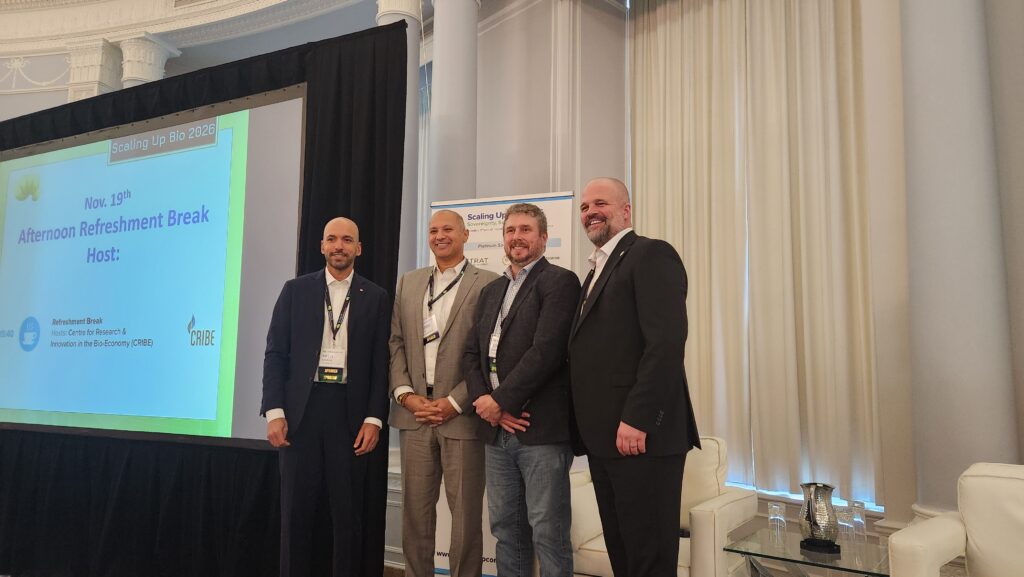
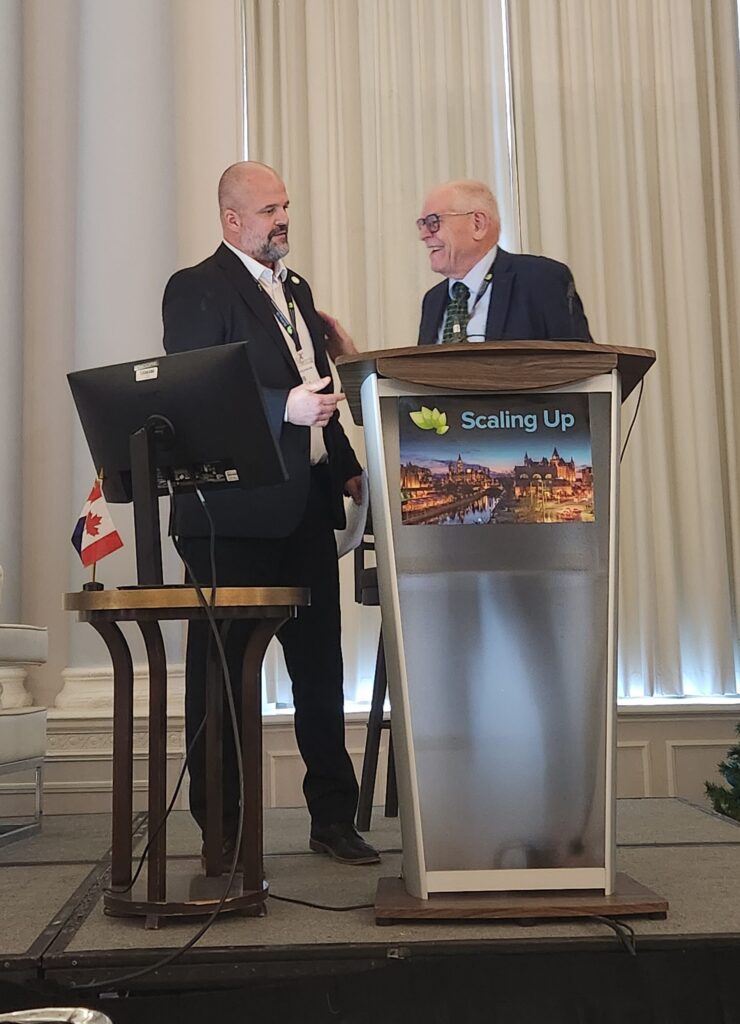
Opening remarks from Bob Larocque – Panel Discussion: Sovereignty, Energy security, Clean fuels, & Supply chain disruptions: No longer a background issue – Scaling Up 2026
OTTAWA, November 19, 2026
Good afternoon, everyone.
It’s a pleasure to be here and to moderate this important discussion on sovereignty, energy security, clean fuels and supply chain disruptions.
When we talk about energy security, we often focus on whether Canada has enough energy resources to meet its needs. And Canada is certainly fortunate in that regard.
But energy security is about much more than what we produce. It’s about our ability to access, transport and reliably deliver the fuels Canadians need, when and where they need them.
It’s also about ensuring we have the domestic production capacity, infrastructure and competitive conditions to meet our future energy needs, including the growing demand for lower-carbon fuels.
And if the past two years have taught us anything, it’s that we can no longer take these things for granted.
The world has changed considerably since 2024.
Geopolitical conflicts, trade tensions, tariffs and shifting industrial priorities are reshaping global energy markets and established supply chains.
Our largest trading partner, the United States, is increasingly focused on strengthening domestic production and attracting investment through policies such as the 45Z Clean Fuel Production Credit.
Recent changes to feedstock eligibility requirements and discussions about potential export restrictions remind us that policies and priorities south of the border can have a significant impact for Canadian producers and consumers.
We’ve also seen how important the strength of energy infrastructure can be.
The disruption to Line 5 earlier this year demonstrated how a single infrastructure incident can create supply challenges across multiple regions, requiring close collaboration between industry and governments to minimize impacts on Canadians.
These events remind us that energy security and sovereignty are no longer background considerations. They are central to our economic resilience and competitiveness.
So, where does Canada stand?
We have substantial conventional refining capacity, significant exports of refined petroleum products and a highly integrated North American energy system.
That integration provides important benefits, but it also creates dependencies. Production and consumption are not always geographically aligned, and some regions rely heavily on infrastructure and supplies that cross international boundaries.
The picture becomes even more interesting when we look at biofuels.
Canada currently consumes approximately 8.5 billion litres of biofuels annually, with about 60% imported, primarily from the United States.
And demand is expected to grow significantly, potentially approaching 12 billion litres by 2030.
That growth represents a tremendous opportunity for Canadian agriculture, forestry, fuel producers and technology innovators.
But it also presents an important challenge.
Increasing demand for lower-carbon fuels does not automatically strengthen Canada’s energy security.
We can establish regulations and policies that create demand, but that doesn’t guarantee the next renewable diesel facility, ethanol plant or advanced biofuel project will be built in Canada.
Investment is mobile, and companies will invest where the conditions are most competitive.
If we want to strengthen Canada’s energy security, we need to ensure that domestic production grows alongside demand. Otherwise, we risk replacing one form of import dependence with another.
Fortunately, there are encouraging developments.
The federal government’s recently proposed targeted amendments to the Clean Fuel Regulations are a positive step.
The proposed credit multiplier for eligible Canadian-produced lower-carbon fuels would help improve our competitiveness with US producers. Increasing the share of compliance obligations that can be met through contributions to registered emissions-reduction funding programs from 10% to 15% would provide additional flexibility to support investment in emissions-reduction technologies.
But policy incentives are only part of the solution.
Canada is and must continue to look at how we strengthen critical infrastructure, improve emergency preparedness and create more flexibility in regional supply chains.
That means looking at pipelines, terminals, storage and blending infrastructure, while ensuring governments and industry can respond quickly and effectively when disruptions occur.
We also need to continue exploring opportunities to diversify our trading relationships and expand markets for Canadian-produced fuels, including new export opportunities as our domestic fuel mix evolves.
And throughout this transition, we need to maintain a competitive environment that encourages innovation and investment.
But let’s be clear: Energy security does not mean energy independence or turning away from international trade. It means building on our domestic strengths, reducing vulnerabilities and ensuring we have options when circumstances change.
Canada has the resources, infrastructure, expertise and innovative capacity to build a more resilient energy future.
The opportunity before us is to turn those strengths into greater domestic production, stronger supply chains, economic growth and continued progress in reducing emissions.
And that brings us to today’s discussion.
We have an excellent panel representing different parts of Canada’s growing bioeconomy, from biofuels and feedstocks to technology development and advanced manufacturing.
I’m looking forward to hearing their perspectives on the challenges they face, how their businesses are adapting and what we can do to strengthen Canada’s energy security and competitiveness.