
What Is A Refinery?
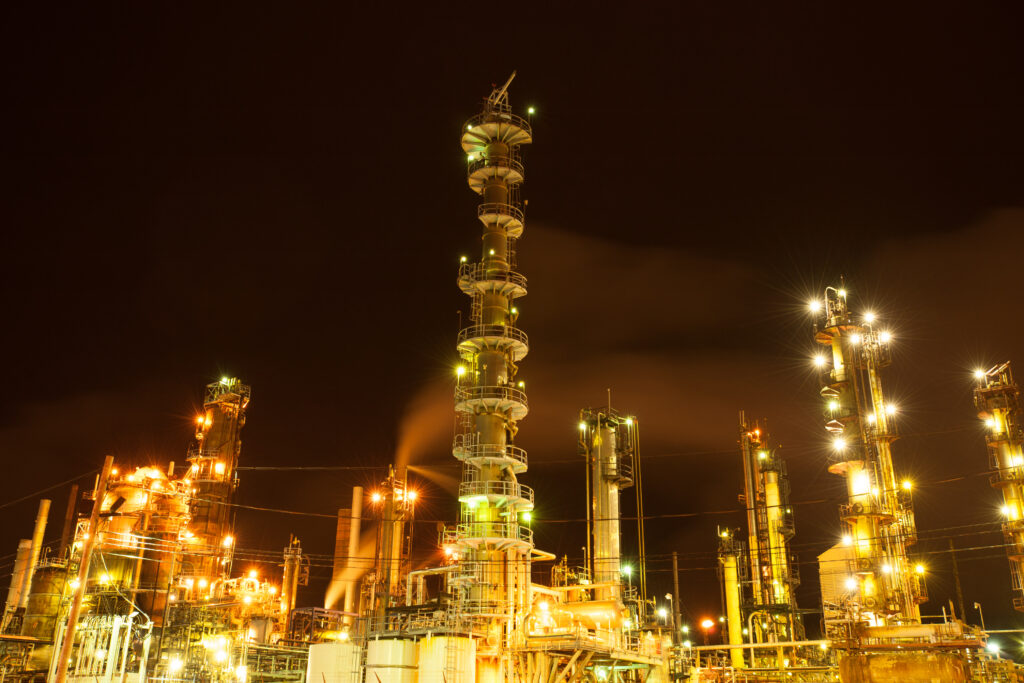
A refinery processes crude oil — a mixture of hydrocarbons — into the fuels and other petroleum products Canadians use every day. Through a series of separation, conversion, treatment and blending processes, refineries turn crude oil into products such as gasoline, diesel, jet fuel, asphalt and lubricants.
A refinery doesn’t produce just one product. Each barrel of crude oil yields a range of products, and the proportions depend on the crude oil being processed and the refinery’s configuration. Although refiners have some flexibility to adjust their product mix, that flexibility is limited by the characteristics of the crude oil and the equipment available.
How Big Is Canada’s Refining System?
Canada has 16 refineries. Thirteen produce a broad range of refined petroleum products, two primarily produce asphalt, and one produces lubricants. Refineries generally operate continuously, 24 hours a day, throughout the year. Individual units may be taken offline for planned maintenance or other operational requirements.
Explore Canada’s refineries and fuel production
No Two Refineries Are Exactly Alike
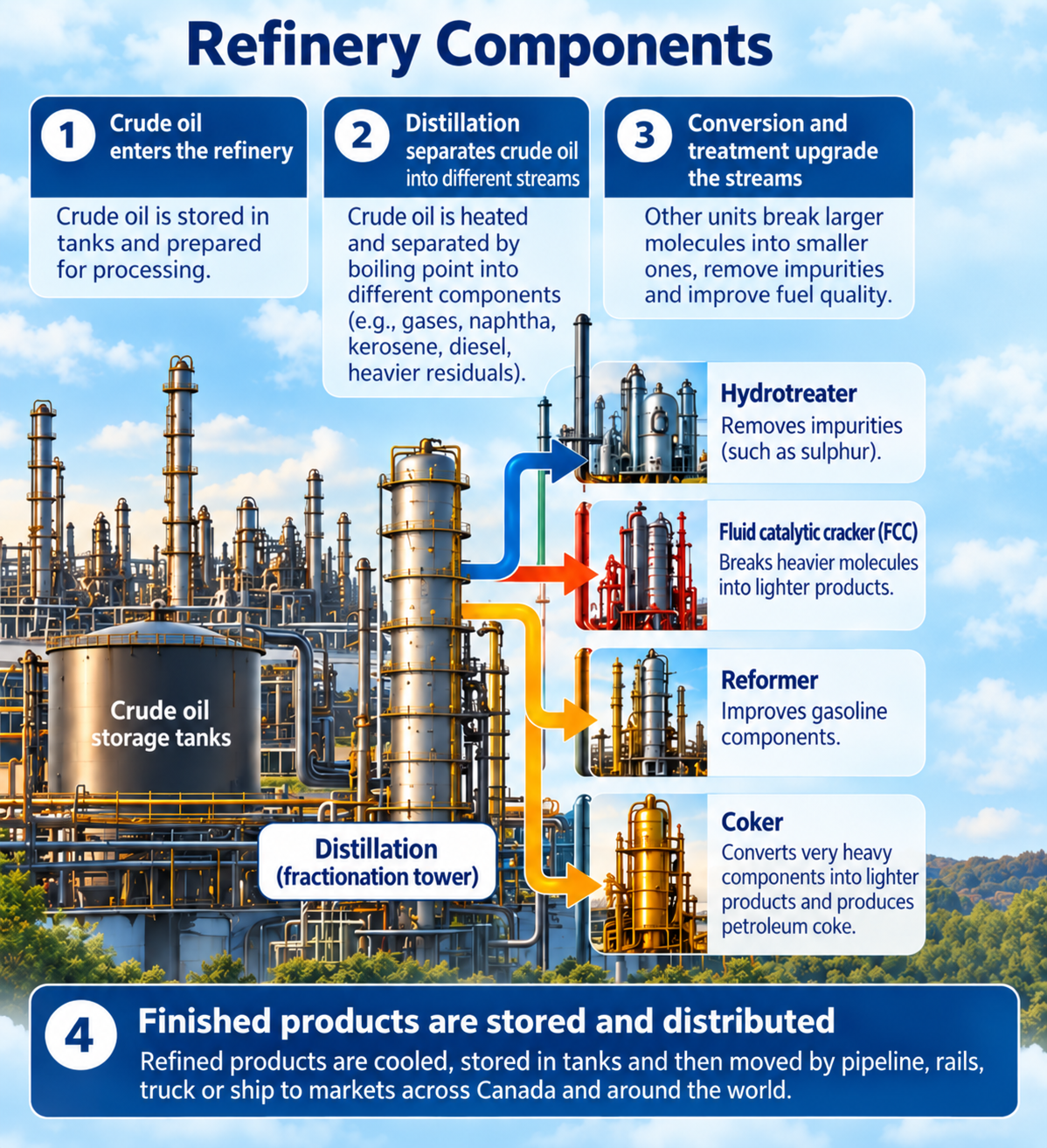
Each refinery has its own configuration based on the crude oil slate it was designed to process, the equipment it has, the products it makes and the markets it serves. The components shown below are common examples of refinery units, but not every refinery has all of them or uses them in the same way.
What Happens Inside?
While refinery configurations differ, most use a combination of separation, conversion, treatment and blending processes to turn crude oil into finished products.
Distillation tower: separates crude oil into different streams based largely on boiling point.
Fluid catalytic cracker: where present, breaks heavier hydrocarbon molecules into lighter components used in products such as gasoline and distillates.
Hydrotreater: removes impurities such as sulphur and helps product streams meet required specifications.
Reformer: upgrades certain components, particularly those used in gasoline blending.
Coker: where present, processes some of the heaviest material and converts part of it into lighter products while producing petroleum coke.
A refinery is an interconnected system. What happens in one unit affects what happens elsewhere.
What Comes Out Of A Barrel?
The mix of products a refinery produces depends on the crude oil it processes and the configuration of its equipment. Refiners can adjust their product mix to some extent through crude selection, operating conditions and how intermediate streams are processed. However, this flexibility is limited by the characteristics of the crude oil and the refinery’s equipment. Refiners cannot simply stop producing one product and switch to producing more of another.
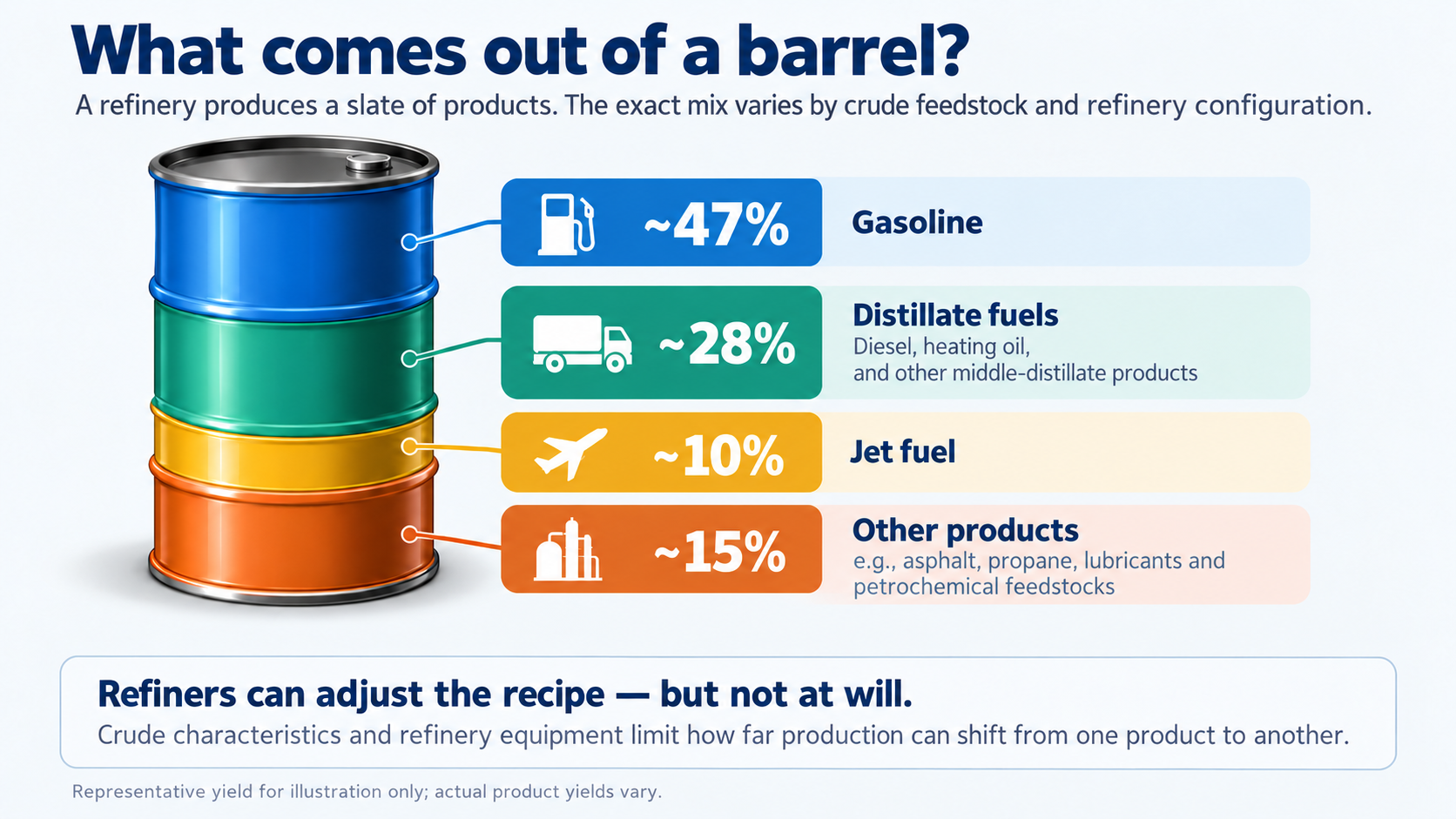
Refiners have some flexibility to adjust their product mix through crude selection, operating conditions and how intermediate streams are processed. But that flexibility is limited by both the crude feedstock and the equipment available. And refiners cannot independently turn one product off and another one on.
Do We Produce Enough?
At the national level, Canadian refineries produce enough finished petroleum products to meet domestic demand overall. In 2025, Canadian refineries produced about 117 billion litres of finished products, while Canadians consumed about 105 billion litres. Canada recorded approximately 11 billion litres in net finished-product exports.
National totals don’t tell the whole story, however. Supply and demand vary by region and product, and geography, transportation infrastructure, maintenance and market conditions all influence where fuels are available.
As a result, Canada can import certain refined products even while remaining a net exporter overall. Canada’s fuel supply is part of an integrated North American market, with products moving across provincial and international borders to help meet regional demand.
This interconnected system provides flexibility, while domestic refining remains an important part of Canada’s fuel supply network.
The Bottom Line
Refineries are complex, interconnected facilities that transform crude oil into the range of fuels and petroleum products Canadians rely on every day. Because each refinery is designed around particular feedstocks, equipment and markets, its ability to adjust the product mix is limited.
Canada’s refining system plays an important role in meeting domestic fuel demand and supplying products to regional and international markets. Maintaining and investing in these assets supports reliable operations and helps strengthen Canada’s security of supply.
Maintaining those assets and continuing to invest in their reliability, efficiency and productivity is fundamental to Canada’s security of supply, helping ensure Canadians have the fuels they need today and tomorrow.
